Regional integration propels GBA aviation cluster
jun26
Enhancing Supply Chain Efficiency in the Guangdong--Hong Kong--Macao Greater Bay Area's Air Transport System: A Perspective from Bullwhip Effect Mitigation
He Sui 1,* 1 Hongwen School Qingdao Campus, Qingdao, China* Correspondence: He Sui, Hongwen School Qingdao Campus, Qingdao, ChinaAbstract: The Guangdong--Hong Kong--Macao Greater Bay Area (GBA) has developed a dense and functionally differentiated airport cluster that plays a critical role in regional and global logistics. However, its air transport supply chain still faces significant inefficiencies caused by fragmented cross-jurisdictional governance, long lead times, and weak information connectivity. These conditions intensify the bullwhip effect by amplifying demand fluctuations, distorting inventory decisions, raising logistics costs, and reducing supply chain responsiveness. Against this background, this study examines how the shared-airport model can improve supply chain efficiency from the perspective of bullwhip effect mitigation. Drawing on bullwhip effect theory and supply chain coordination theory, the paper argues that the shared-airport model reduces demand amplification through three main mechanisms: lead-time compression, information sharing with collaborative forecasting, and network optimization. Case evidence from the Dongguan--Hong Kong International Airport Logistics Park, Beijing Daxing Airport's shared equipment model, and the Qingdao Airport Super Cargo Terminal further demonstrates that institutional linkage, resource sharing, and front-end service extension can effectively reduce operational fragmentation and enhance logistics efficiency. Based on these findings, the paper proposes three strategic directions for the GBA: strengthening institutional coordination, building a regional digital logistics ecosystem, and developing a more resilient airport-network structure. The study concludes that the shared-airport model is an important pathway for mitigating the bullwhip effect and improving the efficiency, resilience, and integration of the GBA's air transport supply chain
jun26
The rapid expansion of airports across the Greater Bay Area reflects a policy-driven strategy in which infrastructure is often built ahead of demand, industry experts say. The approach is reshaping the region into a multi-hub aviation system that blends competition with growing coordination across passenger and cargo networks
The Guangdong-Hong Kong-Macao Greater Bay Area is rapidly emerging as one of the world’s most influential aviation clusters. Latest figures show that airports across the region handled 237 million passenger journeys in 2025, alongside approximately 9.72 million tonnes of cargo and mail. The scale of activity not only places the cluster among the leading players in global civil aviation, but also underscores the momentum generated by deeper regional economic integration.
The Greater Bay Area’s aviation network comprises three major hub airports in Guangzhou, Shenzhen and Hong Kong, alongside key airports in Zhuhai and Macao, and regional facilities in Huizhou and Foshan. Together, the network serves more than 200 cities worldwide.
Unlike many aviation markets shaped primarily by passenger demand, the rapid expansion of the Greater Bay Area’s aviation sector bears the hallmarks of a policy-led model. Andrew Yuen Chi-lok, executive director of the Aviation Policy and Research Centre at the Chinese University of Hong Kong, says airport development across the region is driven less by organic market growth than by state-backed infrastructure investment and strategic planning.
“Demand is certainly growing, but the pace of infrastructure expansion is not necessarily a direct response to that demand. Government support, particularly at the regional level, is the key driver,” Mr Yuen told Macao Magazine. He adds that aviation development on the Chinese mainland is closely tied to broader urban strategies, with cities seeking to use the sector to stimulate economic growth.

Samuel Tong Kai Chung, president of the Institute of Macau Civil Aviation Policy Research, shares a similar assessment. Drawing on decades of industry experience – including roles at Macau International Airport as head of research, marketing director and strategic adviser – he argues that the Greater Bay Area’s airport system has been developed not simply to meet existing demand, but as a strategic form of “productive service” infrastructure aligned with national and regional industrial and trade policies.
“Aviation, whether passenger or cargo, is essentially a form of productive service that exists to support industries such as tourism and manufacturing,” Mr Tong said. “Its development must be forward-looking. Without earlier planning, current demand simply could not have been met.”
One example of such long-term planning is the Pearl River Delta Hub (Guangzhou New) Airport, a 41.81-billion-yuan project that broke ground in March. Located in Foshan’s Gaoming district, about 100 kilometres from Guangzhou Baiyun International Airport, the new facility is intended to address aviation capacity shortages in the western Greater Bay Area.
The airport will feature two runways, a terminal spanning around 260,000 square metres, 94 aircraft stands and supporting infrastructure. It has been designed with an initial annual capacity of 30 million passengers and 500,000 tonnes of cargo and mail.
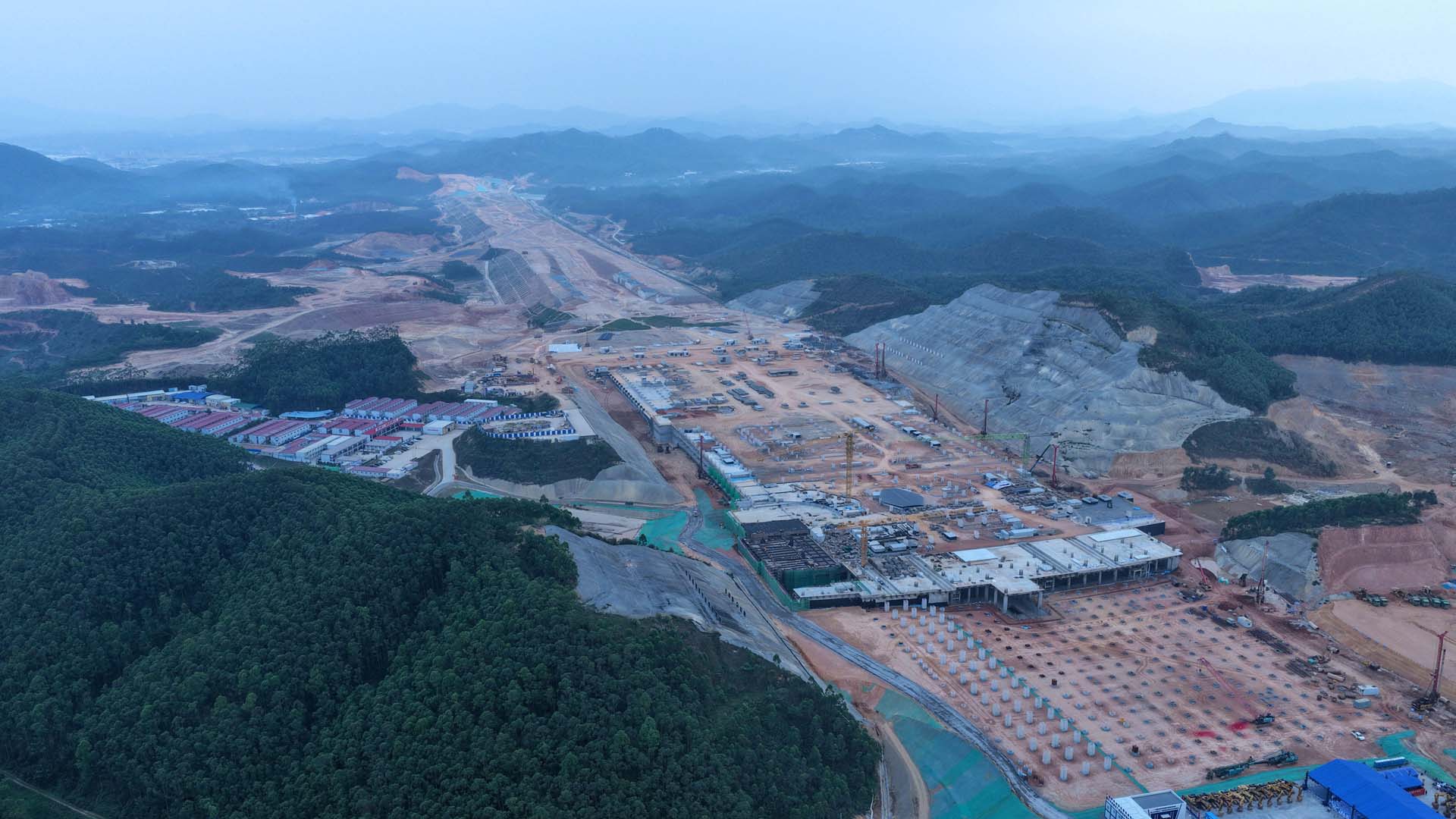
The project is intended not only to ease pressure on Guangzhou Baiyun International Airport, but also to rebalance an aviation landscape that has historically been more heavily concentrated in the eastern side of the Greater Bay Area. More than 20 million people are expected to fall within its service area.
Complex network of hubs
The “Outline Development Plan for the Guangdong-Hong Kong-Macao Greater Bay Area”, released jointly by the Central Committee of the Communist Party of China and the State Council in 2019, already envisaged the creation of a “world-class airport cluster”. The blueprint called for airports across the region to pursue “differential development and positive interaction”, while also advancing intermodal code-sharing services, airspace coordination and air traffic management cooperation.
The structure of the Greater Bay Area’s airport system differs markedly from the conventional “single hub with satellite airports” model seen elsewhere. Instead, it functions as a complex network of multiple large-scale hubs operating in close proximity, with elements of both competition and collaboration. Within a radius of less than 100 kilometres, five major airports are densely concentrated – a configuration rarely seen elsewhere in global aviation.
The core hubs of the aviation cluster – Guangzhou, Shenzhen and Hong Kong – all posted strong results last year. Guangzhou Baiyun International Airport reached a historic milestone in 2025, handling 83.59 million passengers and processing 2.44 million tonnes of cargo and mail, both record highs for the airport.
Last October, the airport officially opened Terminal 3 and its fifth runway, becoming the first civil airport in China to operate five commercial runways. The expansion increased annual passenger capacity to 120 million and boosted cargo-handling capacity to 3.8 million tonnes.
Shenzhen Baoan International Airport handled 66.49 million passenger journeys in 2025, while Hong Kong International Airport – long recognised as the world’s busiest cargo hub – recorded a 15 percent year-on-year rise in passenger traffic to 61 million travellers. Cargo throughput at the airport climbed by around 3 percent to 5.07 million tonnes.
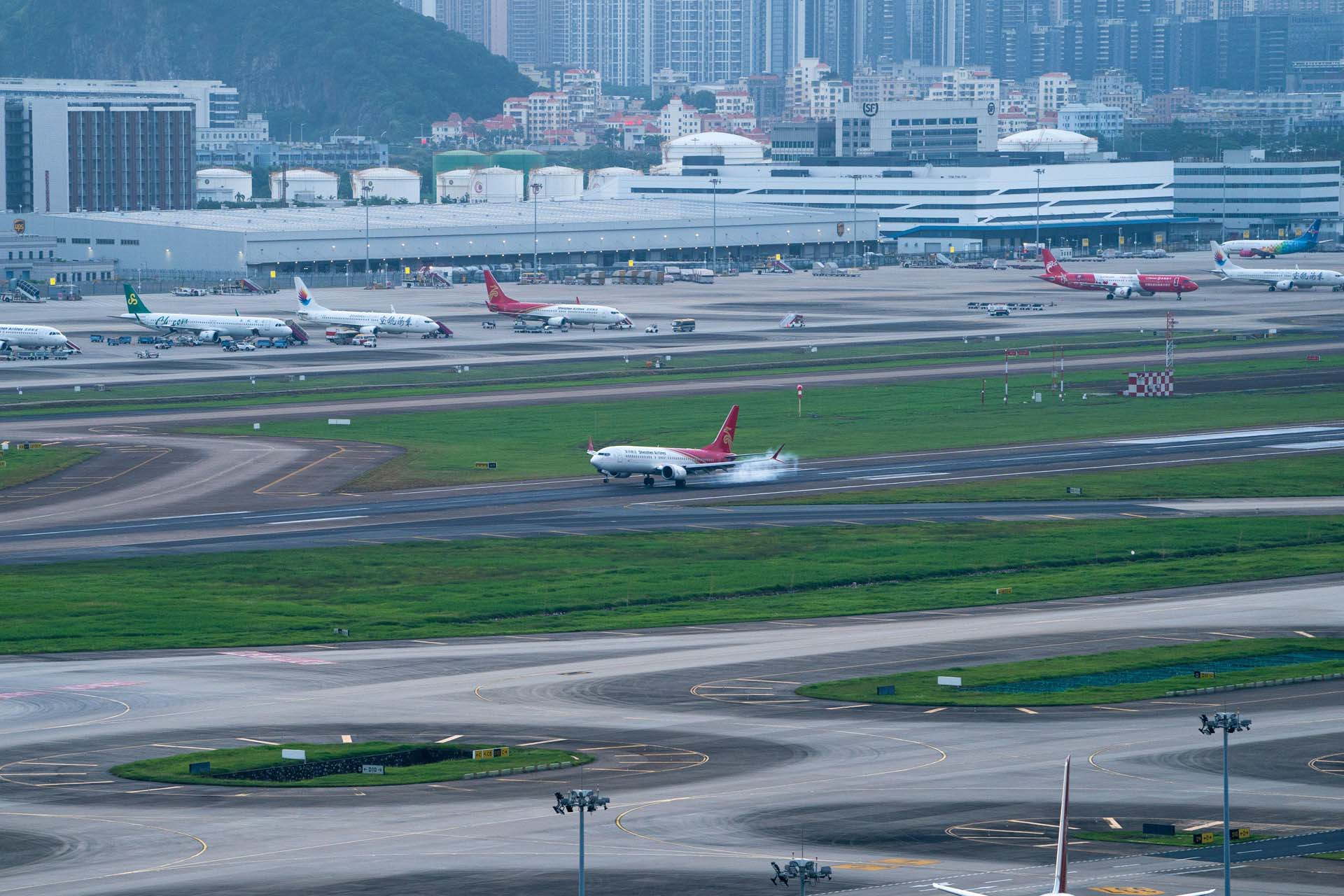
Airports in Zhuhai, Macao and Huizhou also recorded cargo growth last year. Cargo and mail throughput increased by 15 percent in Zhuhai, about 1 percent in Macao and 25 percent in Huizhou compared with the previous year. Zhuhai, meanwhile, remains the busiest passenger Chinese mainland airport operating only domestic flights.
The Airports Council International projects that air passenger demand in the Greater Bay Area will reach 420 million by 2035.
Competition and coordination
Mr Yuen argues that the Greater Bay Area differs fundamentally from airport systems in cities such as New York, London or Tokyo. In those markets, a dominant mega-hub typically anchors a network of smaller airports, allowing resources to be concentrated more efficiently.
“Airports benefit significantly from economies of scale,” Mr Yuen said, noting that larger concentrations of flights and passenger flows tend to reduce operating costs while improving convenience.
By contrast, Hong Kong and Guangzhou – the Greater Bay Area’s two leading airports – occupy somewhat overlapping positions, with both competing for international transfer traffic and long-haul routes. In 2025, Guangzhou Baiyun International Airport launched, resumed or increased frequencies on nearly 40 international passenger routes, while Hong Kong International Airport added 30 new destinations, including Abu Dhabi and Brussels.
At the same time, increasing functional complementarity is emerging within the Greater Bay Area aviation cluster. For instance, Hong Kong International Airport, with its extensive global network, is focused primarily on long-haul international services, while neighbouring Shenzhen concentrates on dense domestic connectivity.
In 2024, Airport Authority Hong Kong – the operator of Hong Kong International Airport – acquired a 35-percent stake in Zhuhai Jinwan Airport, deepening cooperation between the two sides. The partnership had already produced a series of joint projects, including the “Fly-Via-Zhuhai-HK” service launched in December 2023. Under the arrangement, passengers can fly from Chinese mainland cities to Zhuhai airport before transferring by bonded coach via the Hong Kong-Zhuhai-Macao Bridge directly into the restricted area of Hong Kong International Airport for onward international flights.
On the cargo side, the “Air-Land Fresh Lane” service, launched in April 2025 by the two airports, provides a dedicated logistics channel for importing live and chilled seafood and fruit into the Greater Bay Area, streamlining customs clearance and quarantine procedures.
Experts agree this tiered division of labour – spanning international, domestic and regional feeder functions across the Greater Bay Area airports – reflects growing coordination within the cluster.
Yet collaboration is not without challenges. Mr Yuen suggests discussions over airport positioning could have progressed more quickly, but differing priorities among regional governments have sometimes affected coordination.
With additional capacity continuing to come online – including Hong Kong International Airport’s third runway, which opened in late 2024, followed by the revamped Terminal 2, inaugurated in May this year – Mr Yuen says higher-level national coordination is becoming increasingly important. A policy-led approach is essential to avoid resource duplication and turn competition into collective regional advantage, he argues, particularly as civil airspace becomes more congested in the Greater Bay Area.
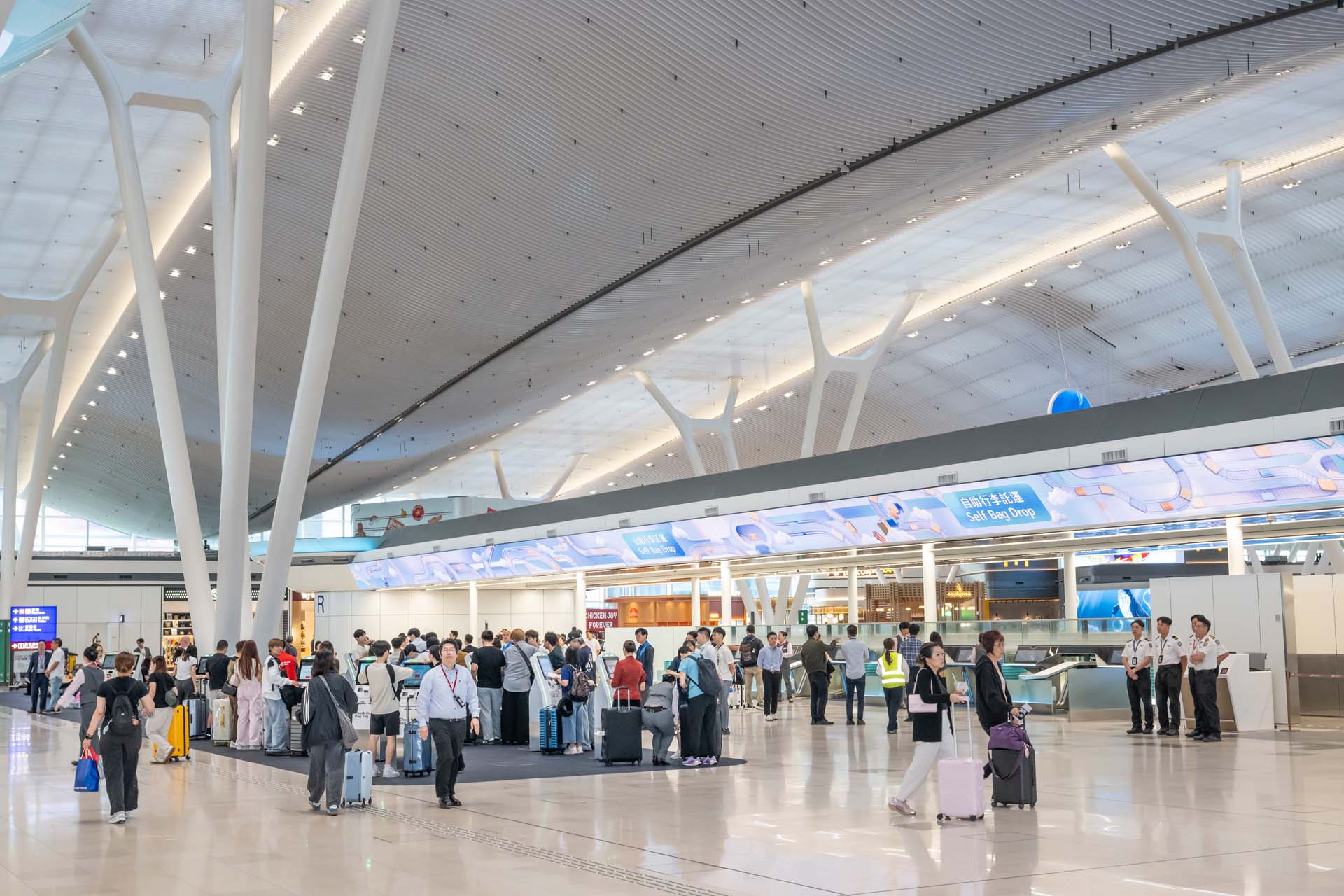
To improve airspace management across the region, the Chinese mainland, Macao and Hong Kong are streamlining communication channels. In May, the three sides held a high-level aviation air traffic management meeting in Xi’an, where representatives from the civil aviation authorities from the Chinese mainland, Macao and Hong Kong discussed the implementation of a range of airspace optimisation measures aimed at improving the operational efficiency of flights within the Greater Bay Area. Among those attending was Pun Wa Kin, president of Macao’s Civil Aviation Authority.
Macao’s niche strategy
Rather than competing directly with larger hubs such as Hong Kong and Guangzhou, Macau International Airport has pursued a more specialised positioning strategy. Mr Tong says the airport should align closely with national priorities, supporting Macao’s role as “One Centre, One Platform” – a world centre for tourism and leisure and a platform for economic and trade cooperation with Portuguese-speaking countries – while also focusing on markets linked to the “Belt and Road” initiative.
Mr Tong argues that airport connectivity directly influences people’s willingness to travel to Macao as a destination, noting that direct flights are often more competitive than itineraries requiring onward ground or ferry transport from Hong Kong. Transit passenger services meanwhile underline the airport’s growing role in serving the western Pearl River Delta, particularly by complementing Zhuhai’s lack of international flight connections.
Macau International Airport handled nearly 2.12 million passengers in the first quarter of 2026, representing year-on-year growth of around 15 percent. Aircraft movements rose 10 percent to 15,952. Travellers from the Chinese mainland accounted for 41 percent of total passengers, while those from the Taiwan region represented 19 percent, with the remainder coming from elsewhere in Asia.
The airport recorded 7.52 million passengers in 2025, a slight decline from the previous year and roughly 80 percent of pre-pandemic levels. Infrastructure expansion has nevertheless continued, with works under way as it seeks to increase its annual handling capacity to 15 million passengers by 2030.
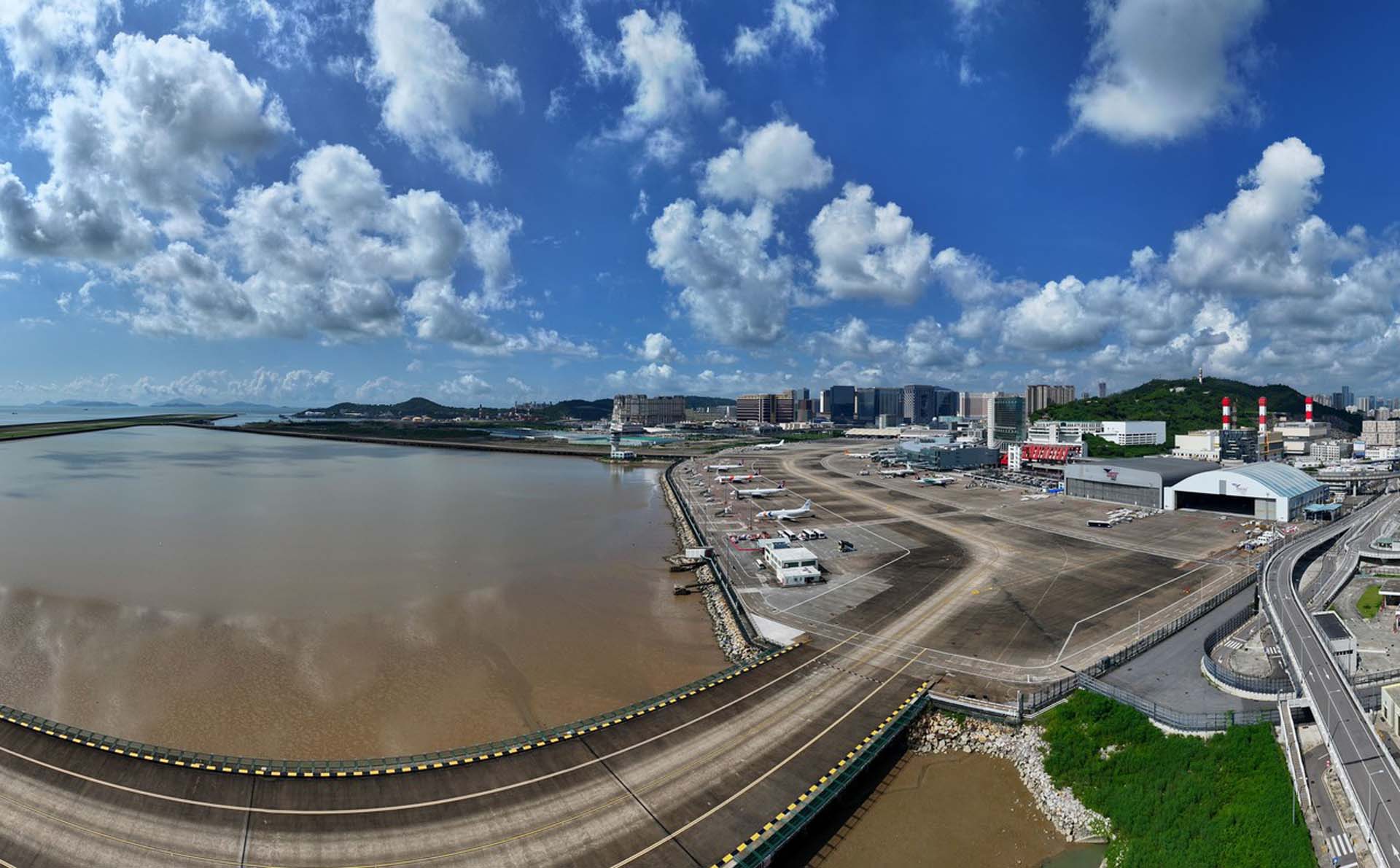
Mr Tong says the expansion is intended not only to meet current demand, but also to provide strategic reserve capacity aligned with national priorities. This, he adds, will help Macao maintain a leading position in niche aviation markets within the region’s multi-airport system.
Addressing concerns over potential overcapacity among Greater Bay Area airports, the expert points to the broader international picture. The United States, he notes, has more than 10,000 airports of various types, while China has only a few hundred. Official figures show that the United States had 19,829 airports in 2024, of which 5,176 were for public use. By comparison, the Chinese mainland had 270 certified transport airports at the end of 2025.
“From a long-term domestic demand perspective, the number of airports in China is not excessive, and there remains significant room for expansion,” he said.

Mr Tong adds that as the Chinese mainland expands unilateral visa-free policies aimed at attracting more European and American visitors, further aviation expansion will become inevitable. In this context, Macao is exploring long-haul route development, potentially in partnership with international airlines.
He also argues that one of the Greater Bay Area’s most distinctive strengths lies in its diversified aviation rights framework under the “One Country, Two Systems” model. Unlike aviation clusters such as New York or Tokyo, which operate within a single jurisdiction, the Greater Bay Area comprises three separate customs territories. Under national authorisation, the Macao and Hong Kong special administrative regions are able to negotiate independent air service agreements with overseas partners.
“Macao has signed more than 40 air service agreements, while Hong Kong has even more,” Mr Tong said. “This diversity of aviation rights is unique to the Greater Bay Area and provides a strong foundation for participating in global competition.”
Global cargo gateway
Within the Greater Bay Area’s aviation strategy, integrated air cargo logistics is increasingly viewed as central to regional competitiveness.
Victor Lei Kuok Fai, chairman of the International Logistics and Forwarding Association of Macau, told Macao Magazine that the presence of multiple airports across the Greater Bay Area should not be seen as a source of rivalry, but as part of an interconnected logistics system. “Based on my 30 years of industry experience, I believe the current planning is appropriate,” he said.
Mr Lei explains that modern logistics operations are inherently “cross-airport” in nature, with cargo flows shifting between airports depending on route density, cost and delivery time.
The Greater Bay Area’s flexibility allows goods to move efficiently across the network rather than being constrained by the route availability of any single airport. If one destination lacks certain long-haul connections, operators can instead route cargo through other airports in the region, creating a complementary logistics system.
Mr Tong describes air cargo as a “productive service” supporting manufacturing and trade. With the Greater Bay Area’s gross domestic product exceeding 15 trillion yuan in 2025, he notes, the region’s growing output of high-tech and high-value products is generating increasing demand for time-sensitive logistics services.
The trend is also creating opportunities for integrated passenger and cargo operations. Mr Tong says Macao’s recent civil aviation law reforms – including the liberalisation of home-based carrier licences – are expected to increase competition and improve the economic efficiency of aircraft belly-cargo utilisation.
Facing land constraints, Macau International Airport has increasingly turned to regional cooperation to expand logistics capacity. Central to that strategy is the Macau International Airport Hengqin Upstream Cargo Terminal, widely regarded as a cornerstone of the city’s future cargo infrastructure. Scheduled for completion by late 2026 and expected to begin operations in the first half of 2027, the facility is designed to handle up to 300,000 tonnes of cargo annually.
Mr Lei describes the Hengqin project as far more than a simple warehouse, calling it a critical tool for strengthening Macao’s logistics capabilities. Under the model, cargo will complete security screening, weighing and palletisation in Hengqin before being transported by sealed trucks directly to Macau International Airport for loading.

The “remote gate-in” arrangement is designed not only to ease space constraints at the airport, but also to reduce cross-boundary processing times by shifting key procedures upstream.
Mr Tong says the strategic importance of the Hengqin facility also lies in its potential to support China’s rapidly growing cross-border e-commerce sector. Within the framework of multiple customs territories, upstream logistics arrangements can help connect Chinese mainland production more efficiently with overseas consumer markets, he argues.
Similar models have already been implemented elsewhere in the region. Hong Kong International Airport, for example, has developed a sea-air intermodal network linking it to several places within the Greater Bay Area, enabling seamless cargo and passenger transfers.
Mr Lei says Macao should pursue a similarly integrated strategy, combining Hengqin’s policy advantages with the city’s distinct aviation rights framework. With the support of the upstream cargo terminal, he argues, Macao can play a flexible transit role within the Greater Bay Area’s emerging “global cargo gateway”, overcoming the geographical constraints that have limited the city’s aviation sector.

Comments
Post a Comment